By Material
① Wood
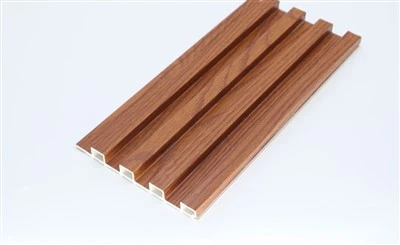
Wood acoustic panels are precision-crafted based on acoustic principles and consist of a decorative finish, a core material, and an acoustic felt backing. They come in two main types: grooved wood panels and perforated wood panels.
② Mineral Wool
Mineral wool acoustic panels offer a wide variety of surface finishes and provide strong decorative appeal. A common type is the knurled mineral wool panel-often nicknamed "caterpillar" board-featuring a surface covered in holes that vary in depth, shape, and diameter.
③ Fabric-Wrapped
Fabric-wrapped acoustic panels utilize centrifugal glass wool as their core material. As an acoustic material widely used around the world for decades, centrifugal glass wool is proven to deliver excellent sound absorption performance.
Fire Safety Performance
Fire safety is critical for acoustic materials used in public gathering spaces such as cinemas, dance halls, auditoriums, multi-function halls, and sports arenas. Tests conducted by the National Fire Protection Testing Center confirm that polyester fiber acoustic panels possess excellent fire-resistant properties, meeting the requirements of the national standard GB8624 Class B1.
These products are widely used in conference rooms, TV stations, studios, cinemas, audiovisual rooms, opera houses, entertainment centers, hotels, multi-function halls, concert halls, bars, restaurants, shopping malls, schools, auditoriums, sports arenas, KTVs, and more.
By Environmental Safety Grade
Acoustic panels are graded based on the formaldehyde emission levels of their base materials. The grades include E0, E1, and E2. E0 represents the highest level of environmental safety (also aligning with European standards), followed by E1, while E2 has the highest formaldehyde emission level. For direct indoor installation, E1 grade meets the required safety standards.
By Structure
① Acoustic Wedges
Acoustic wedges are specialized sound-absorbing structural materials designed for high-performance sound absorption environments. They are manufactured by cutting porous (or fibrous) materials into rigid, deformation-resistant cone or wedge shapes. Acoustic wedges are suitable for high-airflow environments and are primarily used in high-quality anechoic chambers. They are highly effective at absorbing low frequencies, eliminating standing waves, and preventing echoes; the sound absorption coefficient exceeds 0.99 at the low-frequency cutoff. Compared to standard wedges, V-shaped and W-shaped polyester acoustic wedges offer advantages such as a smaller physical footprint and more reasonable pricing.
② Diffusers
In addition to performing all the functions of flat acoustic panels, diffuser panels utilize their three-dimensional surfaces to scatter sound waves at various angles. This eliminates acoustic "dead zones" during sound diffusion, improves sound quality, balances the audio, attenuates excessive bass and treble, and enhances the overall acoustic profile.
Product Structure:
A structural acoustic material featuring a medium-density fiberboard (MDF) core with 3D triangular or cylindrical grooves machined into the front face and circular holes drilled into the back. The surface is spray-painted (colors can be customized), and a fire-retardant acoustic fabric is bonded to the rear.
Applications:
TV stations, cinemas, opera houses, concert halls, conference centers, stadiums, audio rooms, residential spaces, shopping malls, hotels, karaoke lounges, bars, restaurants, etc.
③ Perforated Aluminum Honeycomb Panels
These panels consist of a perforated face sheet and a perforated back sheet bonded directly to an aluminum honeycomb core using high-quality adhesive, creating a sandwich structure. A layer of acoustic fabric is placed between the honeycomb core and the face/back sheets. The honeycomb core divides the interior into numerous small, enclosed cells; this restricts airflow and impedes sound waves, thereby increasing the sound absorption coefficient (which can exceed 0.9). Simultaneously, the structure enhances the panel's inherent strength, allowing for larger individual panel sizes and greater design flexibility. Perforation rates can be customized based on interior acoustic requirements to control the composite structure's absorption coefficient within a specific range, achieving the desired acoustic performance while effectively managing costs. Perforation diameter and spacing are controlled, and the perforation rate-capped at a maximum of 30%-can be adjusted to meet specific client requirements; common hole diameters include 2.0 mm, 2.5 mm, and 3.0 mm. The perforation specifications for the backing board match those of the front panel, and high-quality non-woven fabric or similar sound-absorbing materials are used as the acoustic backing.
④ Perforated Wood
Perforated gypsum board features cylindrical holes extending through from the front to the back; it is constructed by bonding a breathable backing layer and sound-absorbing material (capable of absorbing incident sound energy) to the rear surface. The sound absorption mechanism relies on a vast network of tiny, interconnected pores within the material; sound waves penetrate deep into the material through these pores, generating friction that converts sound energy into heat. The absorption characteristics of porous materials show that the sound absorption coefficient increases with frequency, meaning that low-frequency absorption is less effective than high-frequency absorption.